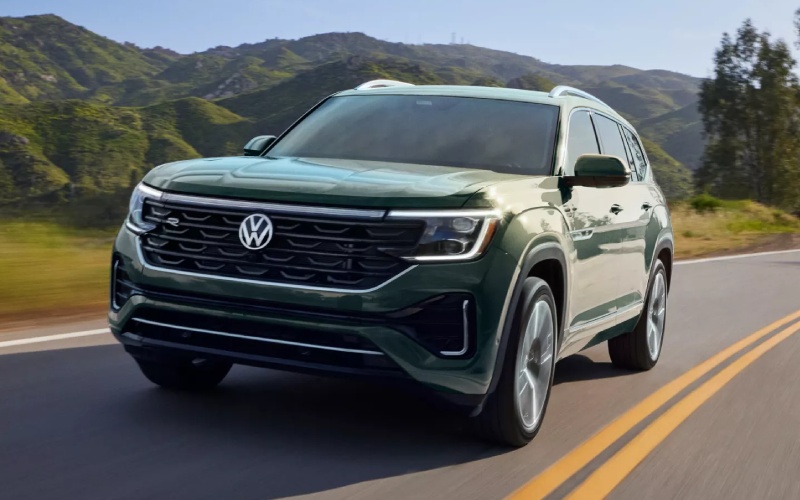
Bob Penkhus Volkswagen - 2026 Volkswagen Atlas or 2026 Hyundai PALISADE – Which three-row SUV has the more flexible cargo space for families around Castle Rock, CO?
When families compare three-row SUVs, a single question comes up again and again: which one makes loading up kids, pets, strollers, sports gear, and weekend luggage simpler every single day? Around Castle Rock, CO, where drives can swing from school drop-off to camping prep in the same afternoon, cargo space and seat flexibility matter just as much as strong all-weather traction. In that context, the 2026 Volkswagen Atlas has earned a reputation for being easy to live with, while the 2026 Hyundai PALISADE brings compelling features and an upscale vibe of its own. Here’s a deeper look at how they stack up when your to-do list is long, and your gear list is longer.
Numbers you can feel, not just read
Start with volume. The Atlas offers up to 96.6 cubic feet of cargo space when the second and third rows are folded, and that number translates into real-world flexibility. The load floor is broad and flat, so wide storage bins and camping coolers settle in without creative Tetris. The PALISADE counters with up to 86.7 cubic feet, which is still expansive, but you’ll notice the difference when loading bulky items side-by-side. Behind the third row, the Atlas’s boxy packaging also helps—it’s the kind of space that swallows a full grocery haul and a folded jogging stroller without crowding. If you routinely balance people and bulky gear, that extra room makes planning easier and packing faster.
Seat-folding design is equally important. In the Atlas, quick-release levers and low-effort folding let you move from three rows to a long-load setup in moments. The second row’s generous slide range and available captain’s chairs create simple pathways to the third row, minimizing the shuffle when you’re buckling kids or hosting adult passengers. The PALISADE’s seat execution is polished, with available relaxation seating up front and a refined second row, but families who regularly flip their configuration for errands and activities tend to prefer the Atlas’s straightforward mechanisms and squarer cargo bay.
Tech that makes cargo days easier
Both SUVs understand that smart tech can improve packing and loading. The Atlas’s standard 12-inch touchscreen and available Digital Cockpit Pro keep maps, camera views, and trailer info in easy view. Wireless App-Connect® and available Wi-Fi Hotspot help you coordinate meetups or stream a playlist while you pack up for the weekend. The PALISADE’s dual-screen layout (a standard 12.3-inch touchscreen with an available matching 12.3-inch cluster) is elegant, and its available integrated dash cam is a clever addition. On days when you’re in task mode, though, the Atlas’s clear menus and simple camera access make hitching, backing, and maneuvering in tight lots more stress-free.
A hands-free power liftgate is a must-have if you juggle boxes, bags, and car seats. Both models offer it, so your hands can be full and your tailgate still swings open. From there, the Atlas’s wide opening and low liftover height help with heavier items. If your weekends include mountain bikes or roof boxes, factory roof rails on either SUV are a welcome convenience; the Atlas’s combine nicely with its sturdy stance for road-trip peace of mind.
Towing and altitude: why torque matters for cargo
On the Front Range, families often ask how their SUV will feel when loaded or towing at elevation. The Atlas’s standard turbocharged 2.0 TSI® engine delivers 269 horsepower and 273 lb-ft of torque, putting its twist on tap early in the rev range—helpful when you’re merging uphill onto I-25 or cresting the Palmer Divide with a trailer. The PALISADE’s gas V6 and available hybrid system are capable and smooth, and both SUVs are rated to tow up to 5,000 pounds with trailer brakes. Still, if you’re regularly hauling a pair of kayaks, a small camper, or a cargo trailer, the Atlas’s accessible torque curve is a confidence booster you’ll feel on every grade.
All-weather traction is another Castle Rock essential. The Atlas’s available 4MOTION® all-wheel drive adapts to changing surfaces and conditions, providing reassuring control on gravel pull-offs and slushy days. PALISADE’s available HTRAC AWD is similarly adept, with configurable modes for different surfaces. The difference is subtle in good weather, but in snow or on loose surfaces, the Atlas’s quick, transparent responses pair nicely with its settled chassis tuning.
Everyday comfort when you pack it full
Comfort features become even more meaningful when your SUV is fully loaded. The Atlas’s standard heated and ventilated front seats help keep the driver focused in shifting weather, and the available heated second row brings welcome relief for passengers in winter. The cabin’s design emphasizes storage that’s easy to reach and use—cupholders, door bins, and covered compartments that keep little essentials from tumbling around. PALISADE responds with available Nappa leather and premium touches, and its available dual-pane sunroof adds upscale flair. For drivers who prioritize a clean, simple interface and pure usable space, the Atlas remains the more task-friendly companion.
If your use case leans toward frequent reconfiguration—carpool one day, solo cargo run the next—the Atlas’s room and easy-folding hardware save time. If your checklist emphasizes cabin polish and unique add-ons like an integrated dash cam, the PALISADE’s feature set will appeal. Most families, however, will discover that the Atlas’s extra volume and square load area tip the scales for stress-free errands and big-trip packing.
Frequently Asked Questions:
Can both SUVs fit adults in the third row comfortably?
Yes, both can accommodate adults in a pinch. The Atlas’s shape and legroom make the third row feel a bit more natural for grown-up passengers on short-to-medium trips.
Do I need to step up trims to get a big touchscreen?
The Atlas features a standard 12-inch touchscreen across its lineup, while PALISADE includes a 12.3-inch touchscreen. You’ll find large, clear interfaces in either model.
Which SUV is easier to load with big, boxy items?
The Atlas’s up-to-96.6 cu ft capacity and flatter, wider load floor make it particularly friendly for bulkier cargo and long items.
As you research, it’s smart to bring a few of your real-world items—a folding stroller, a hockey bag, or a camping bin—to a side-by-side demo. When you do, you’ll likely find the Atlas’s space and simplicity help you get on the road faster. For a no-pressure comparison and a quick seat-folding walkthrough, plan a visit with Bob Penkhus Volkswagen, serving Pueblo, Castle Rock, and Monument. We’ll help you test what matters to your routine, from third-row access to ease of loading and towing setup.